
At CCC, we assist businesses in obtaining Self-Sealing Permission in a smooth and compliant manner. This facility enables faster dispatches, minimal interaction with authorities, and greater control over export and bonded movements. Our end-to-end support ensures timely approvals along with continued compliance post-approval.
What is Self-Sealing Permission?
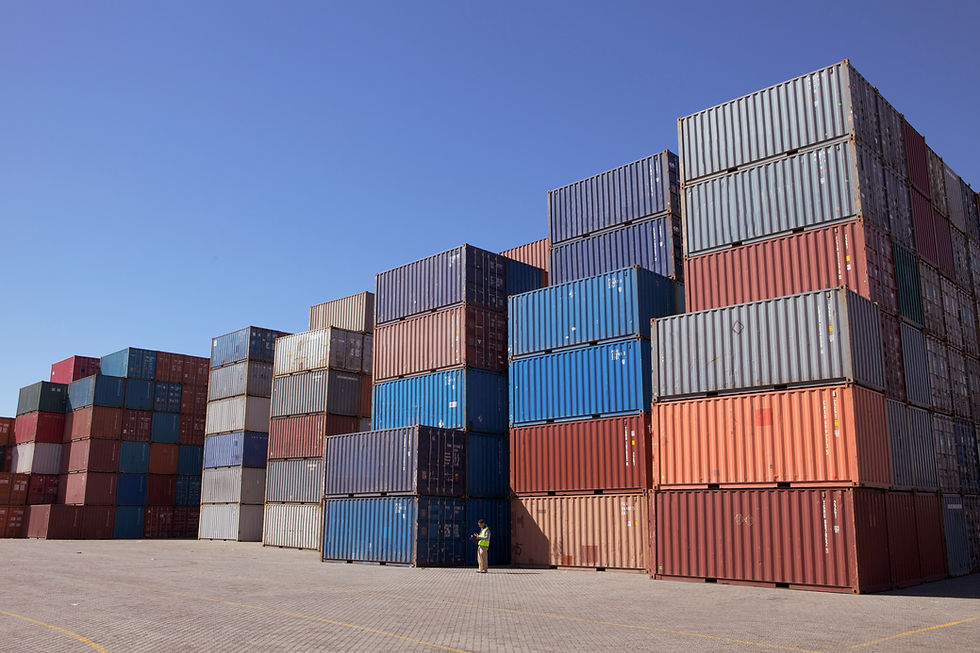
Self-Sealing Permission allows eligible exporters and bonded units to seal export consignments at their own premises instead of at the port or ICD. This significantly simplifies logistics, reduces turnaround time, and lowers operational costs, while remaining fully compliant with Customs and GST regulations.
Self-Sealing Permission
Why Choose Self-Sealing?
Faster Dispatches
No waiting at ports or ICDs for sealing
Lower Costs
Reduced handling, detention, and logistics expenses
Operational Control
Sealing and stuffing at your own facility
Compliance-Ready
Digitally traceable and audit-friendly process
Eligibility Criteria & Validity of Self-Sealing Permission
All exporters who are registered under GST and regularly filing returns are eligible to apply.
Validity Period:
-
Manufacturer Exporters: 5 years
-
Merchant Exporters: 1 year
Upon expiry, the permission must be re-applied for renewal.
Procedure for Grant of Self-Sealing Permission
1. Application Filing
An application must be submitted to the jurisdictional Customs officer along with prescribed documents such as IEC, GST registration, PAN, lease/title documents of premises, premises layout, and list of goods to be exported.
The application should be filed at least 15 days prior to the first planned export.
2. Premises Verification
Post submission, the Customs officer conducts a physical visit to the premises to assess suitability for container stuffing and sealing.
3. Approval by Competent Authority
After the site visit, the case is forwarded to the Principal Commissioner/Commissioner for final approval.
Once granted, the permission is valid across all Customs stations in India.
4. Unit-Specific Approval
A separate Self-Sealing Permission is required for each unit/location. A single approval cannot be used for multiple units.
5. Procurement of E-Seals & Execution
After approval, the exporter must procure e-seals from notified vendors.
The exporter can then affix the seal on export consignments after giving prior intimation to the jurisdictional Customs office, usually one day before stuffing.
CCC’s Scope of Services
Documentation & Application Support
-
Preparation and filing of Self-Sealing applications
-
Drafting and vetting of declarations, undertakings, and annexures
-
Coordination with Customs and GST authorities
Approval & Liaisoning
-
End-to-end follow-up with the department
-
Handling clarifications, representations, and compliance responses
-
Support until formal permission is granted
Vendor Coordination & Operational Support
-
Assistance in coordinating with notified e-seal vendors
-
Guidance on factory stuffing and sealing procedures
-
Training and compliance advisory to ensure adherence to regulations
Frequently Asked Questions (FAQs) for BIS / ISI Certification
Q1. Is BIS / ISI certification mandatory for all products?
No, only specific products listed under the various scheme framework and QCOs are mandated to be BIS certified.
Q2. What is a quality control order (QCO)?
BIS certification scheme is basically voluntary in nature. However, for a number of products, compliance to Indian Standards is made compulsory by the Central Government under various considerations viz. public interest, protection of human, animal or plant health, safety of environment, prevention of unfair trade practices and national security.
For all such products, the Central Government directs mandatory use of Standard Mark under a Licence from BIS through issuance of Quality Control Orders (QCOs) in exercise of the powers conferred by sub-sections (1) and (2) of section 16 read in conjunction with section 17 and subsection (3) of section 25 of the BIS Act, 2016.
After the date of commencement of the QCO, no person shall manufacture, import, distribute, sell, hire, lease, store or exhibit for sale any product(s) covered under the QCO without the Standard Mark (e.g. the ISI Mark).
Q3. Which products come under BIS / Scheme I?
Examples include electrical appliances, cables, cement, LPG cylinders, medical imaging equipment, steel products, etc. Detail of products which are covered under compulsory BIS certification is available at https://www.bis.gov.in/product-certification/products-under-compulsory-certification/ If your product is in this list, it is compulsory for you to get a BIS licence for it. .
Q4. Can imported goods also need BIS certification?
Yes! imported units of “compulsory certification” products require BIS approval and must carry the Standard Mark to be cleared through customs.
Q5. What documents are required for a BIS application?
Typical documents include product drawings/specifications, bill of materials, test reports from BIS-recognized labs, Quality Manual, factory layout, quality assurance procedures, machinery list, technical file etc.
Q6. What happens if a product fails BIS inspection?
BIS may reject the application, issue non-conformity reports, ask for corrective actions, or suspend / cancel existing license.
Q7. Can the ISI mark be used on non-certified products?
No. Unauthorized use of the Standard Mark is punishable under the BIS Act / rules.
Q8. How often are surveillance audits done?
BIS conducts periodic surprise inspections or audits to ensure continued compliance through the life of the license.
Q9. Is a foreign manufacturer required to apply for BIS certification?
Yes. Foreign manufacturers should obtain certification under the Foreign Manufacturers Certification Scheme (FMCS) or Scheme-X, depending on the product type. They must appoint an Authorized Indian Representative (AIR) to coordinate with BIS on their behalf
Q10. What are the penalties for selling products without BIS certification?
Selling, importing, or distributing products without mandatory BIS certification is a legal offence under the BIS Act, 2016. It can result in product seizure, monetary penalties, and prosecution. BIS has the authority to take strict action against violators.

Reach out to us.
Contact us today to learn more about what we can offer.
Sign up to our newsletter
Get regular updates on schemes directly to your email!